Why Leaders Overthink (And How to Move Forward with Confidence)
Julie Rich explores why capable leaders can become caught in overthinking as their roles become more complex. Learn how to move beyond the search for certainty, make considered decisions and lead with greater clarity and confidence.
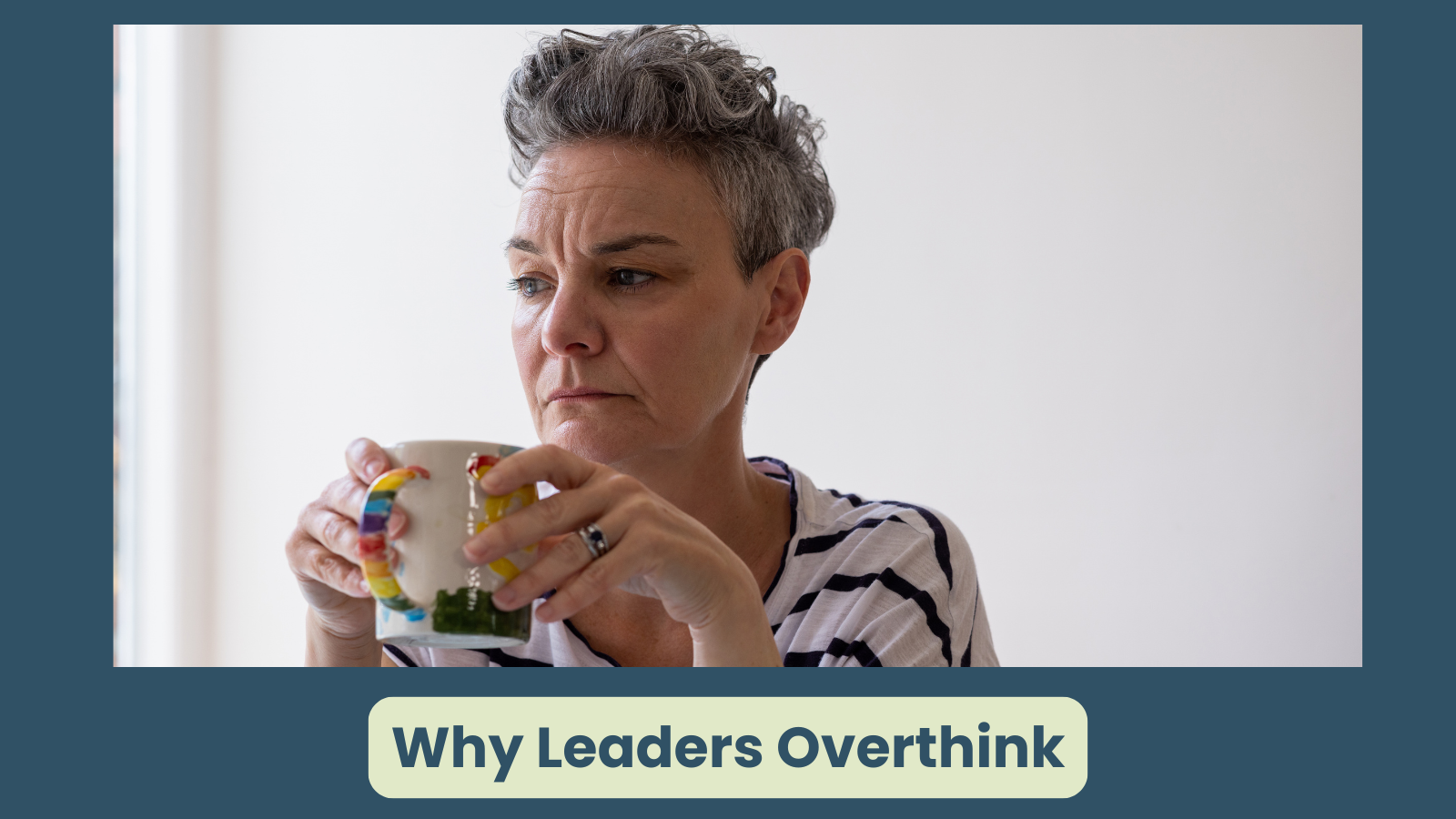
“Clarity often comes through action, not before it.”
There’s a moment I see often in my work, and it doesn’t look like a lack of confidence.
It looks like hesitation.
A capable leader slows down.
Second-guesses themselves.
Starts searching for the “right” answer as if it exists somewhere just out of reach.
It’s often labelled as overthinking.
But that’s not quite what’s going on.
What Overthinking Looks Like in Leadership
This pattern shows up in different ways:
A leader trying to plan their next career move but wanting certainty before committing
Someone holding back from sharing their perspective, unsure how it will be received
A leader speaking honestly, but without shaping the message for impact
Different situations. Same underlying tension:
“How will I be perceived if I do this?”
Why Leaders Start Overthinking
At a certain point in a leader’s career, the rules change.
Earlier on, success comes from:
Having the right answers
Being reliable
Demonstrating technical capability
But as leaders step into more senior roles, that’s no longer enough.
Now success depends on:
Judgement
Timing
Relationships
How others interpret what you say and do
And here’s the shift that catches many leaders off guard:
There is no single “right” answer anymore -only trade-offs.
The Real Reason Overthinking Happens
Overthinking isn’t a weakness.
It’s often a sign that a leader has become aware of the complexity around them—but hasn’t yet adjusted how they respond to it.
When thoughtful, intelligent people try to think their way to certainty in an uncertain environment, they get stuck.
Not because they lack capability.
But because they’re trying to eliminate risk in a space where that’s not possible.
How to Stop Overthinking as a Leader
The solution isn’t to think more.
It’s to become more deliberate.
That means:
Recognising when you’re trying to control how something will land
Shifting focus to clarity of intent and position
Deciding on your next step -even without full certainty.
Confidence at a senior level doesn’t come from having perfect answers.
It comes from being able to move forward without them.
From Hesitation to Leadership Clarity
If this feels familiar, it’s worth considering:
You’re likely not stuck because you lack options.
You’re stuck because you’re trying to find the safest one.
And in leadership, the safest option is rarely the one that creates movement.
Conclusion: Overthinking Is a Signal, Not a Flaw
Overthinking is not something to eliminate. It’s something to understand.
It signals that you’ve stepped into a more complex leadership environment, one that requires a different way of thinking and deciding.
The shift is subtle, but important:
From seeking certainty → to making considered decisions
From controlling perception → to leading with clarity
From hesitation → to deliberate action
And that’s where real leadership begins.
Key takeaways
Senior leadership increasingly relies on judgement, timing and relationships rather than having one “right” answer.
Overthinking often comes from trying to eliminate uncertainty or control how decisions will be perceived.
Leadership confidence grows when you can make considered decisions and move forward without complete certainty.